

Bangalore, (Karnataka) [India]: There is a quiet cost embedded in the way Indian small businesses attempt to grow, and it rarely shows up on balance sheets.
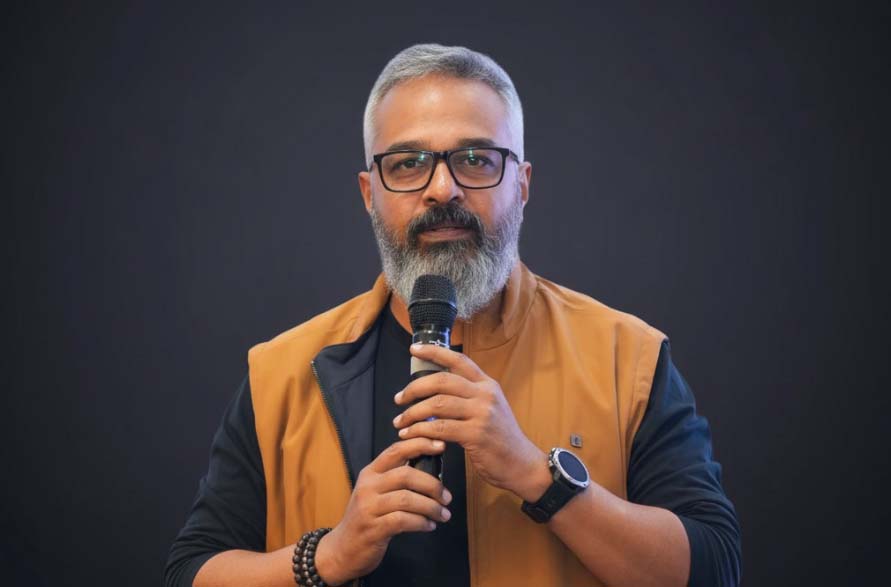
Kiran Chandrashekar, entrepreneur and the creator of LeadAthoN, has given this inefficiency a name. He calls it The Network tax, a cumulative drain of time, money, and energy spent on networking systems that seldom translate into real business outcomes.
For years, MSMEs and independent founders have been caught between two expensive choices. Digital marketing has become increasingly unaffordable, with rising customer acquisition costs pushing smaller players to the margins. Networking, often positioned as the natural alternative, has not delivered the relief it promises. The expectation has traditionally been one that of patience, where trust builds slowly and results are deferred into an uncertain future. Many businesses, Kiran Chandrashekar observed, do not survive long enough to see that promise fulfilled.
His understanding of this pattern is rooted in over a decade of observing the Indian small business ecosystem at close quarters. The problem, as he frames it, is not with networking itself but with how it has been designed. Most formats, he argues, are structured around the growth and continuity of the organisation rather than the immediate success of its members. The outcome for the individual business owner becomes incidental rather than intentional, creating a system where effort is guaranteed but returns are not.
LeadAthoN, established in 2023, emerges as a deliberate departure from that model. Built on what Chandrashekar defines as a Member First framework, the approach of LeadAthoN reverses the traditional priority. Every element of the format is engineered around delivering measurable outcomes for the participant, with a clear emphasis on speed and relevance.
The execution reflects this philosophy. LeadAthoN sessions are designed as tightly structured, high intensity environments where founders are not merely introduced but strategically connected. The process compresses what would typically take months of scattered interactions into a few focused hours. The emphasis is on relevance and intent, ensuring that conversations are not exploratory but directional.
Early results have strengthened the argument. Participants have reported generating up to ten times the number of meaningful connections they would expect from conventional networking over an extended period. More significantly, several of these interactions have translated into tangible business or collaborations within a matter of months, challenging the long held belief that networking is inherently slow.
What begins to take shape is a different understanding of trust itself. In this system, trust is not left to evolve organically over time but is built through structure, context, and design. Networking, in this sense, moves away from being a passive activity and becomes an engineered process.
By introducing the idea of the network tax into the business vocabulary, Chandrashekar is also pushing for a broader shift in how founders evaluate their growth strategies. The question is no longer whether networking works, but whether the system they are participating in is designed to work for them.
For MSMEs, solopreneurs, and homegrown businesses operating under increasing pressure, this reframing arrives at a critical moment. As traditional marketing avenues grow more expensive and less predictable, the demand for high conversion, relationship driven alternatives is intensifying.
LeadAthoN positions itself within this gap, not as an incremental improvement but as a structural rethink. If the early data continues to hold, the conversation around business networking in India may begin to move away from patience and persistence toward precision and outcomes.