

What happens to *Brand America—and the world—when Uncle Sam stops representing a republic and starts performing for an algorithm?
In Uncle Sam 2.0, author NV Subbarao explores how the symbolic figure of Uncle Sam—once a unifying representation of democratic ideals—has evolved in an era shaped by social media platforms, digital tribes, algorithmic narratives, and institutional strain.
Blending systems thinking, social media research, and geopolitical analysis, the book introduces a powerful analytical framework built around five core axes of power:
Political, Economic, Cultural, Military, and Technological.
Through this lens, Uncle Sam 2.0 examines how democracies adapt, fracture, or recalibrate in a world increasingly influenced by algorithms, misinformation, economic anxiety, and shifting global alliances.
Rather than viewing polarization, media manipulation, institutional distrust, and geopolitical instability as isolated crises, the book reframes them as interconnected system-level transformations in the digital age.
Inspiration & Expertise
This book was inspired by a fundamental question:
How does a pre-digital symbol of national identity—Uncle Sam—survive in a hyper-digital world?
The world has changed dramatically in the age of social media. Narratives, influence, and power now move through networks, platforms, and algorithms rather than traditional institutions.
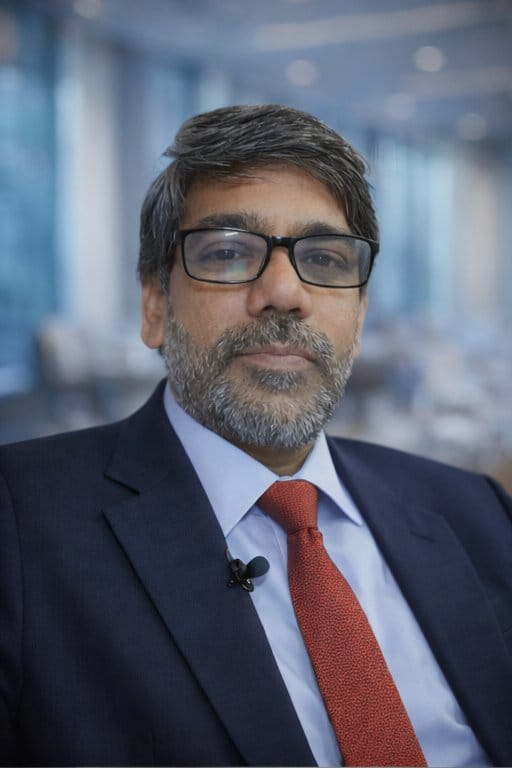
As a former corporate leader (CEO, COO, VP–Sales & Marketing) with experience across global corporations and startups—and now an academic researcher studying social media behavior and networked systems—NV Subbarao brings both practical leadership experience and analytical research to this topic.
His research into digital engagement, feedback systems, and social cybernetics forms the conceptual backbone of the book. Having observed how digital platforms reshape consumer behavior, incentives, and narratives, he saw similar dynamics unfolding in politics and geopolitics.
Uncle Sam 2.0 sits at the intersection of:
- Social media platforms
- Networked societies
- Systems theory
- Sociology of media usage
- Global political dynamics
Key Insights & Takeaways
Readers will discover:
- How the United States once inspired the world as a land of freedom and opportunity, and how that inspiration has gradually shifted toward alienation and skepticism.
- How power dynamics have evolved in the social media era, enabling the rise of cult-like political movements.
- How digital tribes and algorithmic amplification contribute to polarization and narrative warfare.
- A structured Five-Axis Framework for evaluating national power:
- Political
- Economic
- Cultural
- Military
- Technological
- A new analytical tool called the System Integrity Score (SIS) to assess democratic resilience.
- How media ecosystems have shifted from gatekeeping information to amplifying attention-driven narratives.
- Why institutional capture and cultural polarization rarely happen suddenly—but instead emerge gradually through distorted feedback systems.
The central insight:
Modern democratic decline is rarely dramatic collapse.
It is gradual feedback distortion.
Social media platforms and algorithms play a distinct role in amplifying noise over signal—reshaping political incentives and public perception.
By understanding these distortions, readers gain a more analytical and less emotional lens for interpreting political developments.
Case Studies & Real-World Examples
The book integrates contemporary and historical examples, including:
- The evolution of American alliances after World War II
• The transformation of media ecosystems—from editorial gatekeepers to algorithmic amplification• Economic populism and inflation-driven narratives
• Algorithm-driven polarization
• Judicial and institutional stress tests in modern democracies
• Global ripple effects in countries such as India, Brazil, Hungary, and the Philippines
• The emergence of cult leadership and personality-driven politics
Each case is examined not as partisan critique, but as system-level adaptation, revealing how incentives, narratives, and power structures interact.
Challenges in Writing the Book
One of the biggest challenges was avoiding reactive commentary.
In an era dominated by breaking news cycles, the temptation is to respond to events. Instead, the book steps back to identify enduring patterns beneath the headlines.
Another challenge was balancing analytical rigor with narrative accessibility—making systemic thinking understandable for general readers without oversimplifying complex dynamics.
Intended Impact on Readers
The book aims to help readers:
- Understand how digital ecosystems shape public opinion
• Develop a structured framework for interpreting political turbulence
• Learn to separate signal from noise in media narratives
• Recognize patterns behind cult leadership and democratic fragility
Rather than leaving readers anxious about democratic decline, the book encourages critical thinking and recalibration—how institutions, leaders, and citizens can redesign feedback systems to restore balance.
Long-Term Relevance
Unlike many political books tied to a specific election cycle, Uncle Sam 2.0 is built around structural frameworks and social media dynamics.
The Five-Axis Model, System Integrity Score, and social cybernetics approach are designed to be applied across:
- Future political developments
- Other democratic nations
- Emerging global power shifts
The book’s value lies not in predicting events, but in teaching readers how to interpret transformation.
At its core, Uncle Sam 2.0 captures the drift from inspiration—when America was widely admired—to alienation, where it is increasingly viewed with caution or fear, and explores the role social media platforms and algorithms have played in that shift.
If you want to understand how algorithms, media ecosystems, and power structures are reshaping modern democracies—this book is essential reading.
👉 Buy Now on Amazon today and explore the future of democracy in the algorithmic age.