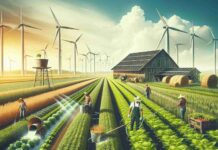


India is the world’s second-largest producer of potatoes, yet for millions of farmers, potato cultivation remains a high-risk, low-margin gamble. Volatile prices, erratic weather patterns, fragmented supply chains, and limited access to scientific advisory often erode profitability. In this landscape of uncertainty, a new wave of AgriTech innovation is ushering in what can best be described as “Farm Peace” a technology-led transformation that brings predictability, profitability, and purpose back to the furrow.
At the heart of this shift lies a data-driven vision that treats potato farming not as a seasonal activity, but as an integrated value chain powered by science, analytics, and collaboration.
Today, Farmpeace stands as a growing ecosystem with a network of 1,000+ farmers, over 5,000+ acres of land under cultivation, and more than 1,000 individuals directly and indirectly connected to its operations. This scale is not merely a number, it represents a structured movement toward organized, technology-enabled agriculture.
Reimagining the Potato Value Chain
Traditionally, potato farming in India has been input-intensive and market-uncertain. Farmers often rely on conventional seed varieties, inconsistent irrigation practices, and limited soil diagnostics. Post-harvest, inadequate cold storage infrastructure and price fluctuations further compress margins.
AgriTech platforms are now intervening at every stage from seed selection to market linkage. Advanced soil testing tools provide real-time data on nutrient composition, enabling customized fertilizer application. Satellite imagery and IoT-enabled sensors help monitor crop health, moisture levels, and pest risks. Predictive analytics models guide farmers on optimal sowing windows and harvesting cycles, minimizing climate-related losses.
By embedding intelligence into every decision point, technology is replacing guesswork with informed precision.
From Input Optimization to Yield Maximization
One of the most significant breakthroughs in potato farming is precision agriculture. With GPS-based mapping and remote sensing, farmers can identify variations within their fields and tailor inputs accordingly. This reduces wastage of water and fertilizers while enhancing yield quality.
AI-powered disease forecasting systems are helping farmers anticipate late blight and other common threats. Timely alerts and advisory services, delivered via mobile platforms in regional languages, ensure that even smallholder farmers can act swiftly.
The result is a tangible shift higher yields per acre, improved tuber quality, and reduced cultivation costs. For farmers, this means not just better output, but better income stability across seasons.
Strengthening Post-Harvest Infrastructure
In potato farming, profitability is often determined after harvest. Price crashes during peak season and lack of cold storage access have historically forced farmers into distress sales.
AgriTech-led supply chain integration is changing this narrative. Digital marketplaces are directly connecting farmers with processors, retailers, and institutional buyers. Real-time price discovery tools empower farmers to make informed selling decisions. Smart storage solutions equipped with temperature monitoring systems are extending shelf life and reducing spoilage.
Some platforms are facilitating forward contracts, ensuring assured buy-back arrangements at pre-agreed prices. This shift from uncertainty to structured market access is central to achieving “Farm Peace.”
As Sandip Patel, Managing Director at Farm Peace, explains “Our vision is simple to remove uncertainty from farming. When a farmer plants a seed, they should already have visibility on quality inputs, scientific guidance, and assured market access. Technology is not just about increasing yield; it is about increasing confidence. Farm Peace is about building an ecosystem where farmers can focus on cultivation while we help stabilize the rest of the value chain.”
Sustainable Practices for a Climate-Resilient Future
As climate variability intensifies, sustainability is no longer optional. AgriTech innovations are promoting water-efficient irrigation systems such as drip and sprinkler technologies. Regenerative farming practices, including crop rotation and soil health management, are being encouraged through data-backed advisory.
By reducing chemical overuse and optimizing water consumption, these interventions are not only lowering input costs but also safeguarding soil fertility for future generations. This alignment of productivity with environmental stewardship represents a critical evolution in Indian agriculture where growth does not come at the cost of sustainability.
Empowering Farmers Beyond Technology
While technology is the enabler, the true transformation lies in farmer empowerment. Training programs, digital literacy initiatives, and on-ground field support are ensuring that farmers are not passive users, but active participants in this ecosystem.
Access to credit through fintech integrations and crop insurance linked to real-time farm data further strengthens resilience. When farmers gain visibility over costs, yields, and market opportunities, agriculture shifts from subsistence to enterprise.
From furrow to future, the AgriTech-led transformation of India’s potato farming sector signals a new chapter. “Farm Peace” is not merely the absence of risk; it is the presence of stability, structure, and shared growth. With innovation rooted in the field and vision anchored in sustainability, potato farming is evolving into a resilient, technology-driven enterprise one that promises prosperity not just for today’s farmers, but for generations to come.