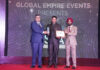


Within the intellectual and literary tradition of Northeast India, the Tista–Himalaya Sahitya Srijan Samman is regarded as a platform that recognises new ideas and contemporary discourse in Hindi literature. The conferment of this honour in 2025 upon Dr. Sunil Kumar Sharma affirms this broad and evolving vision.
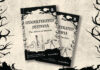
A Bridge Between Literature and Technology: Dr. Sharma’s writing establishes a dialogue between science, technology, and human sensibility. His work in Hindi on Artificial Intelligence, Industry 4.0, and modern technologies demonstrates that contemporary knowledge need not remain confined to technical communities alone, but can become part of literary and social understanding. A complementary dimension of this intellectual journey is visible in his poetry and ghazal collections—Had ya Anhad and Teeragi Mein Roshni—where questions of limits, sensitivity, and inner illumination find expression through verse. Together, these strands suggest that an author who writes on technology does not lose touch with human experience. This balance formed a key basis for the selection.
The award ceremony, held in Siliguri, brought together academicians, writers, and researchers from across the country, lending the event a wide intellectual context. Speakers emphasised that contemporary Hindi literature increasingly values writing that engages with new subjects while retaining linguistic warmth and cultural resonance.
During the ceremony, Dr. Sharma returned the award amount for the development of the journal, observing that “the continuity of ideas and literature depends on the strength of such platforms.” The gesture reflected a view of literature not merely as personal achievement, but as a shared cultural responsibility.
The event itself underscored a broader and meaningful trend in Hindi literary culture, where writing engaged with contemporary ideas and social concerns is finding its rightful place. In this light, the Tista–Himalaya Sahitya Srijan Samman emerges not simply as an honour, but as a sign of a changing literary direction—one in which Hindi literature is actively engaging with present-day themes and emerging intellectual questions.