

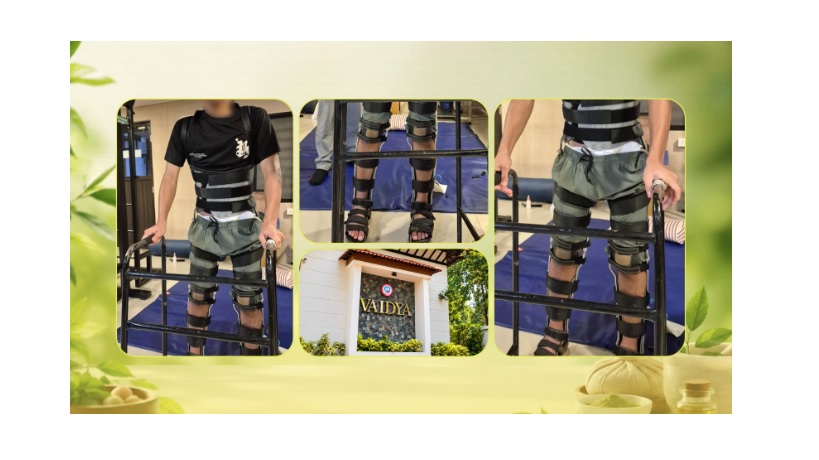
Vaidya Healthcare highlights how timely, multidisciplinary rehabilitation can help stroke survivors rebuild everyday abilities, restore confidence and work towards a more independent life.
A stroke can alter the course of a person’s life in a matter of minutes. But while emergency treatment focuses on saving brain tissue and stabilising the patient, the challenges that follow can last for months or even years. Learning to walk again, communicate clearly, swallow safely or perform something as routine as getting dressed can become significant milestones in the recovery journey.
For stroke survivors and their families, recovery is therefore about much more than leaving the hospital. It is about reclaiming everyday abilities, adapting to new limitations and gradually rebuilding independence.
According to the medical team at Vaidya Healthcare, structured rehabilitation, initiated as early as medically appropriate, plays an important role in this process. A personalised approach that addresses physical, cognitive, communication and functional difficulties can help patients work towards their maximum possible recovery.
Recognising a Stroke Early Can Change the Course of Treatment
Stroke occurs primarily in two forms: ischemic stroke, caused by a blockage in a blood vessel supplying the brain, and haemorrhagic stroke, which results from a ruptured blood vessel and bleeding in or around the brain.
The warning signs are often sudden and should never be ignored. Facial drooping, weakness or numbness in an arm or leg, difficulty speaking, sudden vision changes, dizziness, loss of balance and unexplained confusion can all indicate a stroke. A sudden, severe headache may also be a warning sign.
Unlike the gradual cognitive changes associated with conditions such as Alzheimer’s disease, stroke symptoms typically develop abruptly. Every minute matters, making immediate medical attention essential. Certain treatments are time-sensitive, and their suitability must be determined through an emergency medical assessment.
Importantly, stroke is not exclusively an age-related condition. Younger individuals, including those below 40, can also experience strokes. Uncontrolled hypertension, smoking, harmful alcohol consumption, substance use and physical inactivity are among the contributing risk factors. Cardiac conditions and blood clots originating in the heart can also lead to stroke in younger adults.
The Road to Recovery Often Extends Beyond Physical Movement
The consequences of a stroke depend largely on the area of the brain affected and the extent of the injury. While some survivors experience weakness or paralysis on one side of the body, others may struggle with muscle stiffness, impaired coordination, balance, speech, language comprehension or swallowing.
These difficulties can fundamentally change how a person navigates everyday life. Activities that once required little thought, such as sitting upright, standing, eating, bathing, dressing or walking, may suddenly require assistance.
The complications can extend further. Prolonged immobility increases the risk of pressure injuries and joint stiffness, while swallowing difficulties can contribute to aspiration and malnutrition. Anxiety, depression and social isolation may also affect a survivor’s emotional well-being.
Recovery is often most rapid during the first three months following a stroke, although improvements can continue well beyond this period. This makes timely rehabilitation particularly important.
The medical team at Vaidya Healthcare emphasises that rehabilitation should begin as soon as the patient’s medical condition is sufficiently stable. The intensity, timing and nature of interventions must be tailored to individual abilities, clinical requirements and tolerance.
Why Stroke Rehabilitation Requires More Than One Speciality
No two stroke survivors have exactly the same recovery needs. Some may primarily require support with movement and balance, while others need assistance with communication, swallowing or relearning basic daily activities.
At Vaidya Healthcare, the rehabilitation programme follows a multidisciplinary approach, integrating physiotherapy, occupational therapy and speech and language therapy with Ayurveda-based interventions, wherever clinically appropriate.
Each discipline addresses a different aspect of recovery.
Physiotherapy focuses on restoring movement, muscle strength, joint mobility, posture, balance and coordination. Exercises, stretching, positioning and range-of-motion techniques can help manage stiffness, maintain joint alignment and reduce the risk of complications such as contractures. Walking and movement training also form an important part of improving functional mobility.
Occupational therapy focuses on helping patients regain the ability to perform everyday activities. From dressing and grooming to eating and other essential tasks, the objective is to improve functional independence and make daily routines safer and more manageable.
Speech and language therapy supports individuals experiencing difficulties with speech clarity, language comprehension, communication and swallowing. Assessments help identify the specific challenges and guide an appropriate course of intervention.
Alongside these rehabilitation therapies, selected Ayurveda-based interventions, including external therapies and prescribed internal medicines, may be incorporated depending on the patient’s condition and medical suitability. These form complementary components of an individualised care programme, with due consideration given to the patient’s broader medical requirements.
The programme may also accommodate selected patients requiring advanced nursing or respiratory support, including tracheostomy care and BiPAP assistance, provided their clinical needs can be safely managed by the treating team.
Recovery Is a Family Journey, Too
The physical challenges of a stroke are only one part of the story. For families, the experience often brings an entirely different set of responsibilities.
A survivor with significant physical limitations may require assistance with feeding, bathing, dressing, toileting, repositioning and mobility. Continuous supervision can place considerable demands on caregivers, particularly when family members must balance these responsibilities with their professional and personal lives.
There is also a financial dimension to long-term recovery. Hospitalisation, medication, nursing assistance, rehabilitation sessions, medical investigations, mobility equipment and home modifications can create expenses that continue long after the initial medical emergency. In some cases, family members may have to reduce their working hours or leave employment to provide care.
A structured rehabilitation programme can help address some of these challenges by working towards greater patient independence while equipping caregivers with practical knowledge. Guidance on safe transfers, positioning, daily care and mobility can help families participate more confidently in the recovery process.
Setting realistic goals and involving caregivers in rehabilitation also helps create continuity between formal treatment and everyday life.
Preventing a Second Stroke Is Part of Long-Term Recovery
Rehabilitation is not limited to recovering lost abilities. Reducing the risk of another stroke is equally important.
Managing hypertension, diabetes, high cholesterol and excess body weight forms an essential part of long-term care. Patients must follow prescribed medications, attend regular medical reviews and adopt a balanced diet and physical activity routine suited to their recovery and abilities.
Stopping smoking and avoiding harmful alcohol consumption can further help reduce vascular risk. Antiplatelet and anticoagulant medications, meanwhile, should only be taken as prescribed, since their use depends on the underlying cause of the stroke.
Redefining What Recovery Looks Like
Stroke recovery rarely follows a predictable timeline. While some individuals regain many of their previous abilities, others may require continued assistance and long-term rehabilitation. Progress can look different for every patient, and even improvements in seemingly small everyday activities can carry considerable significance.
Through its multidisciplinary stroke rehabilitation programme, Vaidya Healthcare focuses on individualised treatment, functional improvement and sustained support for patients and their families.
Ultimately, the objective of rehabilitation goes beyond addressing the physical consequences of a stroke. It is about helping survivors regain the confidence to participate in everyday life, rebuild their capabilities and achieve the greatest possible degree of independence. For patients and their families, meaningful recovery is not simply measured by survival, but by the ability to return to the routines, relationships and activities that give everyday life its meaning.


