

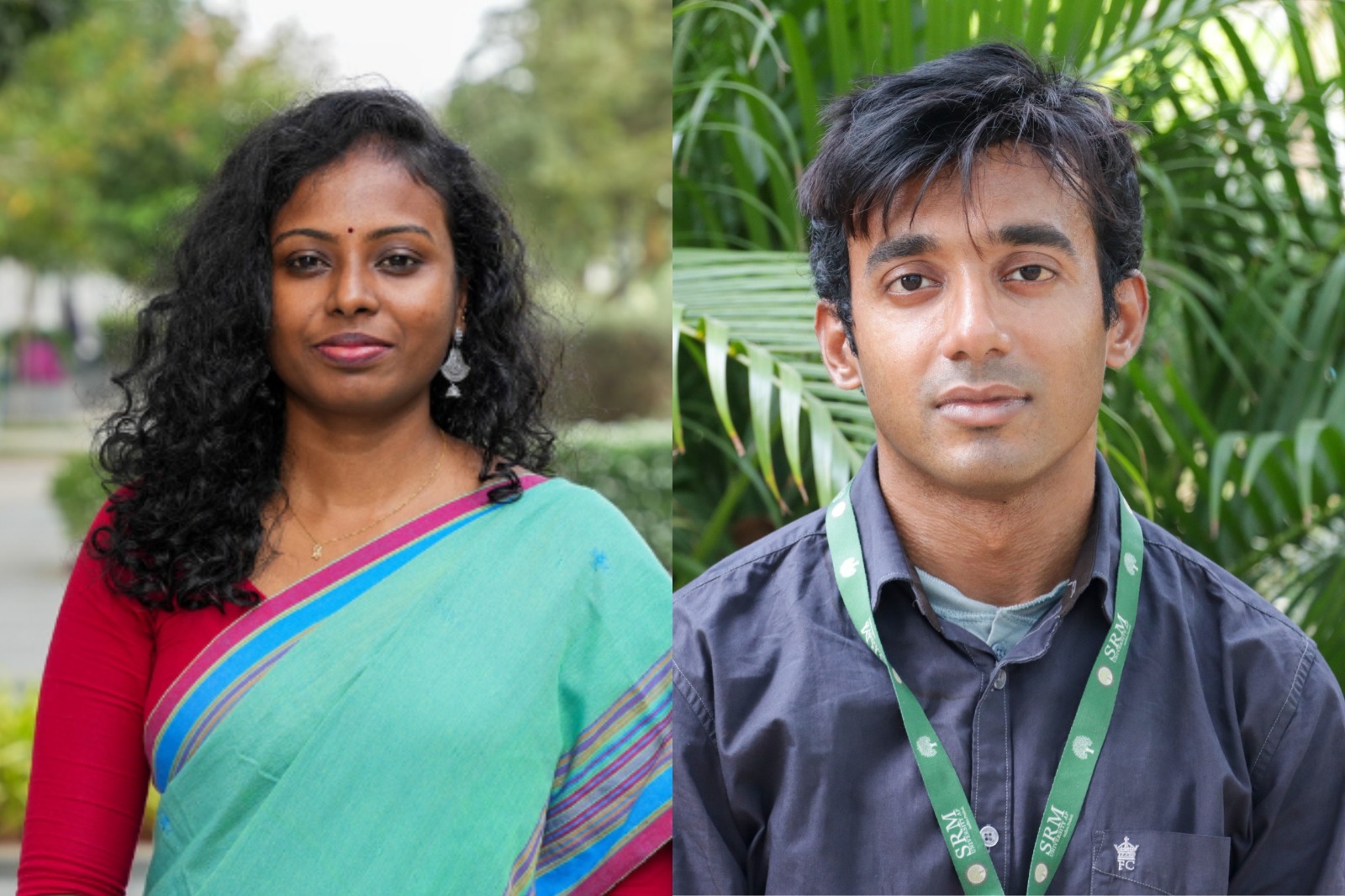
Authors: Dr Saranya Antony A, Assistant Professor, & Sounak Chowdary, Research Scholar, Department of Political Science, SRM University-AP (Amaravati.)
The political landscape of the 2026 Assembly elections in Tamil Nadu and West Bengal represents a period of significant political restructuring, marked by the decline of political leadership and the emergence of an alternative mode of mass mobilisation.
TVK as a New Regional Alternative
The 2026 Tamil Nadu Legislative Assembly election marked the emergence of the debutant political party, Tamilaga Vettri Kazhagam (TVK), as an electoral force. Under the leadership of Tamil film actor C. Joseph Vijay, the party secured 107 seats in the 234-member Assembly. This electoral outcome disrupted the political structure of Tamil Nadu politics, with the Dravida Munnetra Kazhagam (DMK) and the All-India Anna Dravida Munnetra Kazhagam (AIADMK) as the dominant forces since 1967. Conversely, the election resulted in substantial losses for the DMK leadership, including the defeat of Chief Minister M K Stalin, fourteen cabinet ministers, Speaker M Appavu, and Deputy Speaker Pitchandy. Consequently, the DMK was relegated to the status of the principal opposition party with 59 seats.
Vijay’s political ascent is the intersection of cinema and politics, a defining feature of Tamil Nadu’s political culture. Nevertheless, Vijay’s trajectory differs from that of earlier actor-politicians due to the organisational depth and sustained sociopolitical engagement of his fan associations. These fan networks, which had long been involved in welfare activities and massmobilisation across rural and urban Tamil Nadu, served as crucial intermediaries between the leader and the electorate. Their activities facilitated the transformation of cultural popularity into political legitimacy and organisational strength.
Furthermore, Vijay strategically employed cinema as a medium for political communication, embedding social and political narratives within his films to cultivate a direct emotional and ideological connection with the public. This process contributed significantly to the consolidation of a political identity that extended beyond cinematic stardom.
Two significant interferences may be drawn from this political development. First, the rise of TVK reflects the electorate’s aspirations for an alternative political formation capable of entrenched Dravidian political order and offering a renewed discourse on anti-corruption governance. Second, Vijay’s win underscores the enduring relevance of fan-club networks and instruments of political mobilisation in Tamil Nadu. Their grassroots-level penetration and sustained interaction with local communities played a decisive role in facilitating Vijay’s rapid political consolidation, thereby reaffirming the historical relationship between popular culture, charismatic leadership, and electoral politics in the states.
Decline of TMC Dominance
West Bengal’s 2026 election demonstrates that the BJP’s rise in the state has been particularly significant since the 2019 Lok Sabha elections. It was the first time the party won 19 parliamentary seats, replacing the Left and Congress as the principal opponents of the ruling TMC. Nearly 65% of Hindus in West Bengal voted for the BJP, up from 58% and 54.5% in the 2024 parliamentary and 2021assembly elections, respectively. This election marked a turning point in the state’s politics, as a Hindutva party emerged as a major force.
The 2026 assembly election also revealed a shift among Bengali Muslims away from the TMC, splitting minority votes. Humayun Kabir, an ex-TMC leader from Murshidabad, recently formed the Aam Janata Unnayan Party (AJUP). AJUP fielded several candidates from the Murshidabad, Malda and Nadia districts, weakening the TMC’s minority vote base. Kabir won from the Rejinagar and Naodaconstituencies. Similarly, Naushad Siddique (Bhaijan), the ISF (Indian Secular Front) founder-leader, won from the Bhangar constituency in South 24 Parganas, reflecting his increasing popularity among Bengali Muslims.
Despite the previous TMC government providing 1000 rupees to all women under the Lakshmi Bhandar Scheme, announcing a 500-rupee hike in February, and promising 1500 rupees to the state’s unemployed youth, the people voted for a change in political leadership. They benefited from the TMC government’s policy but did not show allegiance to the party when casting their votes. This points to the fact that political leadership for sustainability necessitates a multidimensional engagement that extends beyond economic considerations. It requires continuous attention to political interactions, social mobilisation, cultural connectivity, and people-to-people relations, while simultaneously fostering awareness regarding individual choices, the expression of political rights, and the development of conscious pragmatism among the general public.
Although the political trajectories of Tamil Nadu and West Bengal differ significantly in ideology, historical evolution, and patterns of political mobilisation, both states are currently experiencing shifts in political leadership.