

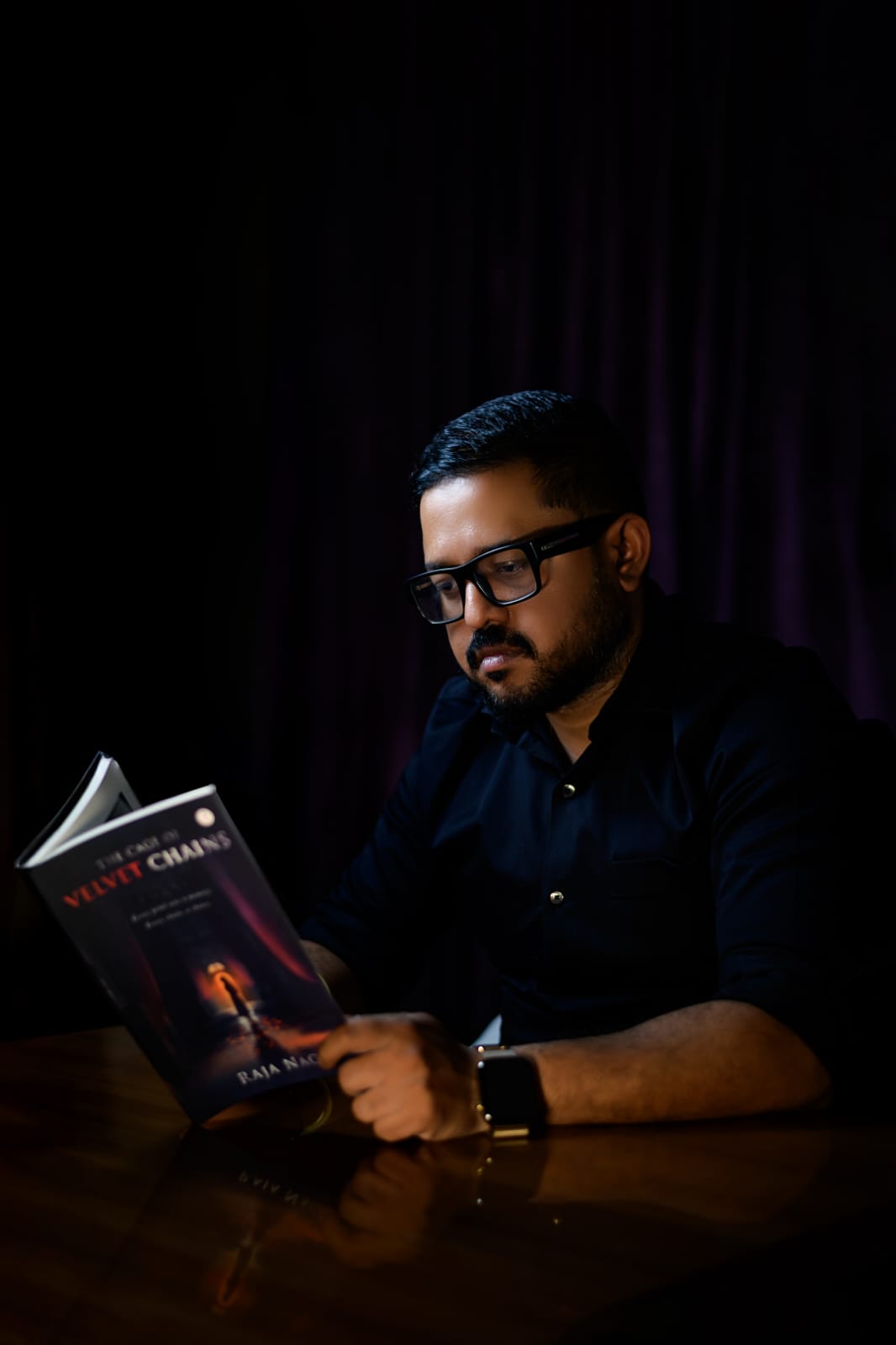
The Cage of Velvet Chains is a haunting and atmospheric gothic novel that explores the fragile boundaries between memory, identity, and inherited silence.
When Ira Sen arrives at her ancestral estate, isolated from the outside world, she expects history—but instead encounters something far more unsettling. The house is not merely a relic of the past; it feels alive, breathing with grief, ritual, and unspoken truths.
Within its marigold-covered walls, shadows stir and long-buried secrets begin to surface. Each door Ira opens, each memory she uncovers, draws her deeper into a legacy shaped by silence and restraint—by chains that are soft to the touch, yet impossible to escape.
As the past tightens its grip, Ira must confront the unsettling reality that not all chains are meant to be broken—and not all ghosts remain buried.
Rich in atmosphere and psychological depth, this novel blends gothic horror with emotional introspection, offering readers a chilling yet deeply human story.
1. What inspired you to write this particular book, and how did the idea for the story come to you?
The idea began with a simple, unsettling question: What if a place remembers you even after you’ve tried to forget it?
I’ve always been fascinated by houses—not as structures, but as silent witnesses. The Cage of Velvet Chains grew out of that fascination. The story first came to me as an image: a woman standing in a corridor, sensing that the walls around her knew more about her past than she did herself. From there, the narrative unfolded naturally—layer by layer—into a story about memory, inheritance, and the quiet ways trauma survives across generations.
2. Can you share some insights into your writing process? Do you follow a specific routine or have any unique rituals?
I don’t follow a rigid routine, but I write best in silence—usually late at night. I need to feel slightly disconnected from the world to write honestly.
I don’t believe in waiting for inspiration; instead, I sit with discomfort until something reveals itself. I don’t have specific rituals, but I often begin by rereading a paragraph from the previous session to reconnect with the emotional tone of the story. Once that happens, the writing tends to take over.
3. The characters in your book are quite distinct. Are they based on real people or purely imagined?
The characters are fictional, but their emotions are real. I don’t base them on specific individuals; instead, I draw from observed behaviors, silences, contradictions, and unspoken tensions in everyday life.
Ira, for example, is not modeled on any one person, but she reflects a quiet resilience—and quiet damage—I’ve seen in many people who have learned to survive without asking questions. Over time, the characters begin to make their own choices, and my role becomes more observational than controlling.
4. Your book explores themes like memory, silence, and inherited trauma. What motivated you to delve into these themes?
These themes interest me because they are universal, yet rarely discussed openly. Many of us inherit emotional burdens without ever knowing their origins.
I wanted to explore how silence can be as powerful—and destructive—as overt violence. If readers take anything away, I hope it is the understanding that confronting the past, however painful, is often the only way to loosen its grip. The story doesn’t offer easy answers, but it invites reflection.
5. The world-building feels immersive and vivid. How did you create the setting?
The setting emerged organically from the emotional needs of the story. Tulsi Bhavan is fictional, but it draws inspiration from old ancestral homes across India—places where history lingers in architecture, rituals, and unspoken rules.
I was influenced by colonial-era houses and family estates where time feels layered rather than linear. I wanted the setting to function as more than just a backdrop—it needed to feel like a living presence, almost a character in itself.
6. How do you balance originality with genre expectations?
I respect genre conventions, but I don’t let them define the core of the story. Gothic and horror fiction often rely on spectacle, but I was more interested in psychological unease—the kind that lingers after the book is closed.
The challenge was resisting the urge to over-explain or fall back on familiar tropes. I focus on emotional truth first; originality tends to follow naturally when you’re honest about what unsettles you.
7. The pacing of the story is tightly controlled. How did you maintain tension?
For me, tension comes from withholding—not information, but certainty. I structured the story so that each revelation leads to deeper questions rather than immediate answers.
Short chapters, intentional pauses, and sensory details help maintain momentum. I paid close attention to rhythm—knowing when to slow down and when to move forward. Horror works best when readers feel compelled to continue, even when they feel uneasy.
8. How do you see storytelling evolving in today’s media landscape?
I believe readers today crave depth, even as attention spans shorten. Traditional storytelling doesn’t need to disappear—it needs to adapt.
That means clearer prose, emotional honesty, and narratives that respect the reader’s intelligence. I aim to write stories that feel cinematic yet intimate—grounded in human experience rather than spectacle. If a story feels true, readers will connect with it, regardless of format or trend.
Step into a world where silence speaks louder than words and the past refuses to fade.
Buy now on Amazon and experience a story that will stay with you long after the final page.