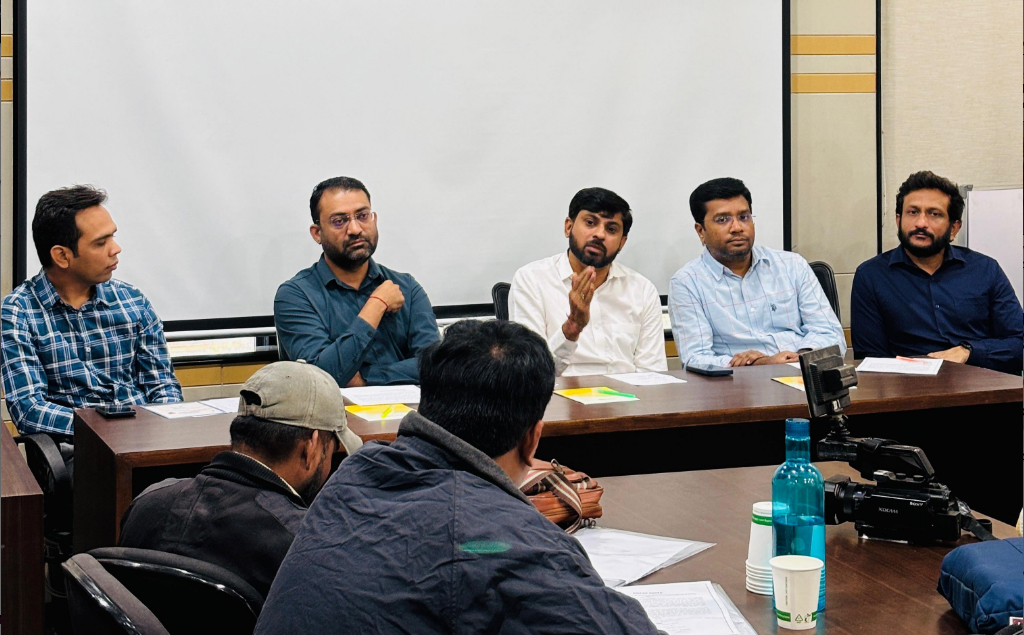

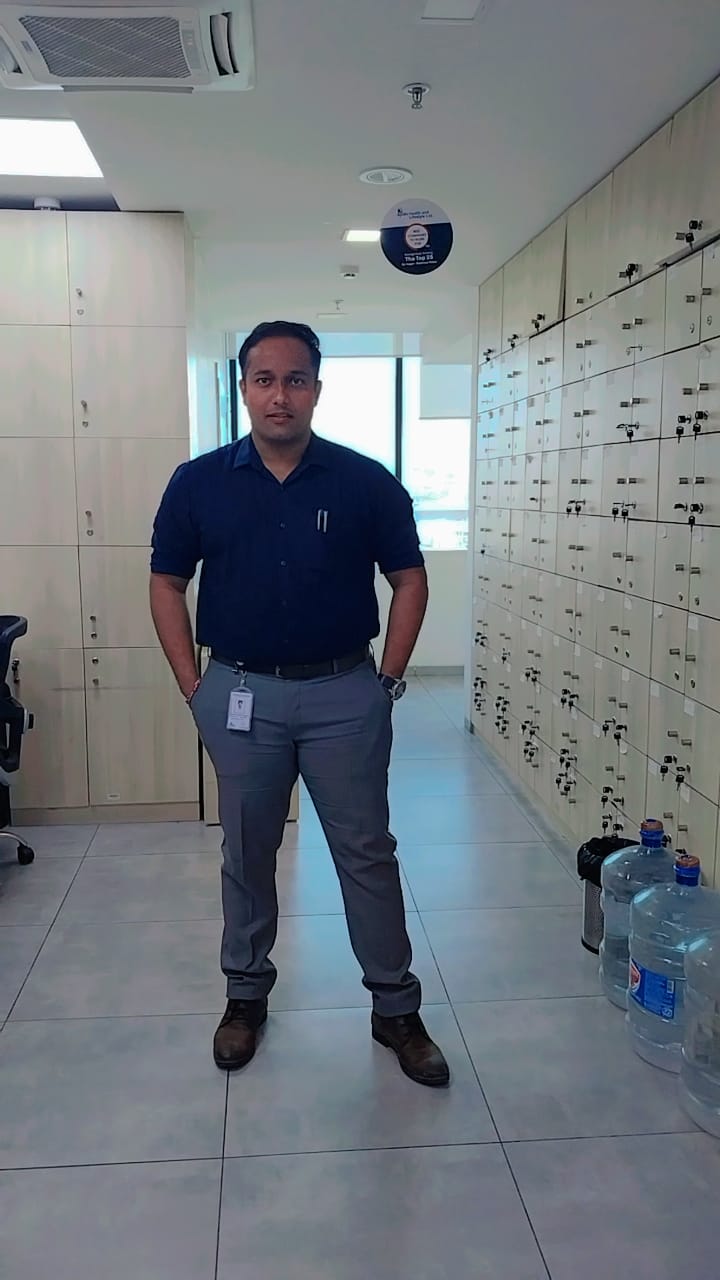
Akhil Kumar Narayana, Assistant General Manager, Communications, SRM University AP
The City That Never Lets You Look Away
Last monsoon, a little girl on the back of her father’s scooter pointed at a giant hoarding and asked, “Appa, why is that lady so unhappy with me?”
It was a face selling face cream. She was far too young to know that the face was meant to make her feel something was missing. She only knew that a stranger twenty feet tall was looking down at her, and that she seemed disappointed.
I have thought about that question ever since.
We live surrounded by faces like that. They loom over bus stops, hang from flyovers and wrap around the pillars of the metro. A jeweller’s smile. A film star’s scowl. A builder promising a “dream home” to people who are still paying rent. None of them were invited. We only wanted to get home.
Here is what makes outdoor advertising different from everything else. You can turn off the television. You can skip the ad on YouTube. You can close the magazine. The difference is choice. But nobody can choose to stop walking down their own street. Nobody can ask a child to close her eyes at every signal.
And these boards are not simply telling us what is for sale. They are telling us what we lack. Your phone is old. Your skin is dull. Your house is small. Your life is a rough draft of someone else’s. Every one of those messages is tested and polished by people who know that a dissatisfied customer is a loyal customer.
Then there is the cost we can actually count.
On a May afternoon in 2024, a dust storm hit Mumbai, and a giant billboard in Ghatkopar came crashing down on the petrol pump below it. Seventeen people died. They were people who had stopped for fuel, or for shelter, or for nothing at all. Behind every collapse is a family that did not ask for an advertisement and will never forget one.
The men who put these boards up are rarely safe either. They climb to enormous heights to change flex sheets, often with no harness and no helmet, for a wage that barely lasts the month. Drivers glance up at a glowing screen for two seconds and travel a long way blind. And all night, thousands of lit boards burn electricity so that we can be sold things while we sleep.
If this sounds like a dream, it is not. São Paulo, one of the biggest cities in the world, passed its Clean City Law in 2006 and took down its billboards. People feared the city would look empty. Many were surprised to find they could finally see their own buildings. Grenoble in France went the same way in 2014 and put trees where ad panels used to stand.
Picture your own junction with the hoardings gone. The sky comes back. So does the old banyan tree, the temple gopuram and the evening light on the road. In place of a face cream ad there could be a line of poetry, a mural by local students or a notice about a free health camp. Our minds might get some room back too, a little space to daydream, to plan or to simply be.
I know the objections. Businesses need to reach customers, and many small shops depend on that visibility. That is a fair concern, and a city can answer it with local shop signs, regulated spaces and fair rules. But a fair concern is no reason to hand over the whole sky.
What we are really deciding is who owns our shared spaces. A street belongs to everyone who walks it. If the public pays for the road and lives on it, the public should have a say in what is shouted from it. A ban would be more than tidy housekeeping. It would be a way of saying that we are citizens more than consumers.
The technology is only getting sharper. Screens now change by the minute, and some can tell who is walking past. It will not stay gentle for long.
So let us start the conversation in our own towns. Ask the council. Ask the neighbours. Ask what our streets would look like if they belonged to us again.
That little girl on the scooter deserves a city that does not look disappointed in her.