

A smooth wall finish is often viewed as the outcome of skilled application. Yet the quality, consistency, and durability of a finished surface depend on several factors that come into play well before the plaster reaches the wall. Material composition, setting behaviour, adhesion, shrinkage and moisture resistance all influence how a plaster performs under different site conditions.
For construction professionals, the challenge is selecting materials that meet the technical requirements of a particular application while remaining practical to mix, spread, and finish. This has encouraged the development of purpose-built formulations that combine selected raw materials with additives designed to improve specific performance characteristics.
Gypsum plaster offers several advantages for internal finishing, including workability and the ability to create smooth surfaces. However, different applications require different formulation priorities. Areas with higher moisture exposure may need greater control over water absorption, while large-scale interior projects may place greater emphasis on setting consistency, ease of application and surface quality.
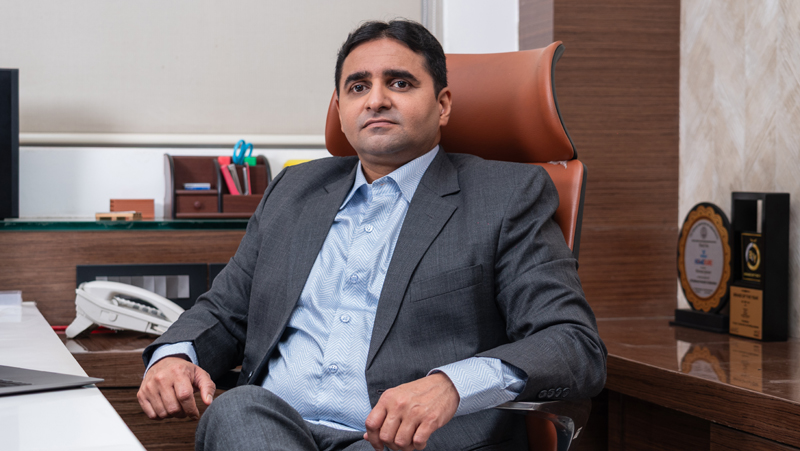
Kaushal Mehta, Managing Director, Walplast Products Pvt. Ltd., said, “The construction industry increasingly needs materials that are developed for specific applications rather than a one-size-fits-all approach. At Walplast, our focus is on understanding site challenges and translating them into practical product solutions. Whether it is managing moisture exposure or simplifying plaster application, the objective is to bring greater consistency, efficiency and reliability to construction.”
The formulation of moisture-resistant gypsum plaster illustrates how material science can address application-specific needs. Additives that help control water absorption can influence the suitability of a plaster for selected moisture-prone internal areas. At the same time, adhesion and compressive strength remain important indicators of how the material performs once applied.
Walplast Products Pvt. Ltd. has introduced HomeSure GypEx MoistShield, a moisture-resistant gypsum plaster specially developed for areas exposed to moisture, such as bathrooms, kitchens, basements, balconies and parking podiums. Formulated with pure gypsum, selected fillers and special additives, the product offers low absorption of moisture from the air and surrounding surfaces. It is also designed for skirting applications where capillary action and efflorescence can pose challenges. Suitable for application on internal brick, block and RCC surfaces, HomeSure GypEx MoistShield provides good bonding and a smooth, high-quality surface, creating a durable base for decorative finishes.
A different set of formulation considerations comes into play when the priority is simplifying interior plastering. HomeSure GypEx Gold uses high-purity retarded hemihydrate gypsum, lightweight aggregates and performance-enhancing additives. Designed for single-coat application, it offers good bonding, ease of application and consistent setting characteristics, helping achieve a smooth and uniform surface suitable for decorative finishes.
Its lightweight composition makes the plaster easier to work with, while its formulation helps minimise shrinkage and reduce the chances of surface cracks. As the product requires only the addition of water at the site, it simplifies the plastering process, saves application time and helps achieve consistent results.
Research and development play an important role in turning material science into practical construction solutions. As construction requirements become more specialised, manufacturers need to invest in continuous innovation, research and product development to address changing site conditions and performance expectations. Developing the right formulation involves balancing properties such as workability, setting time, adhesion and finish quality. For contractors and applicators, selecting the right plaster is equally important, taking into account the substrate, site conditions and finish requirements.
As the construction industry evolves, the focus is moving beyond achieving a smooth finish to developing materials that perform reliably under different conditions. Continued investment in R&D and formulation-led innovation can help manufacturers develop more efficient, consistent and application-specific solutions. Ultimately, better wall finishes begin with the right formulation, supported by informed material selection and skilled application.


