
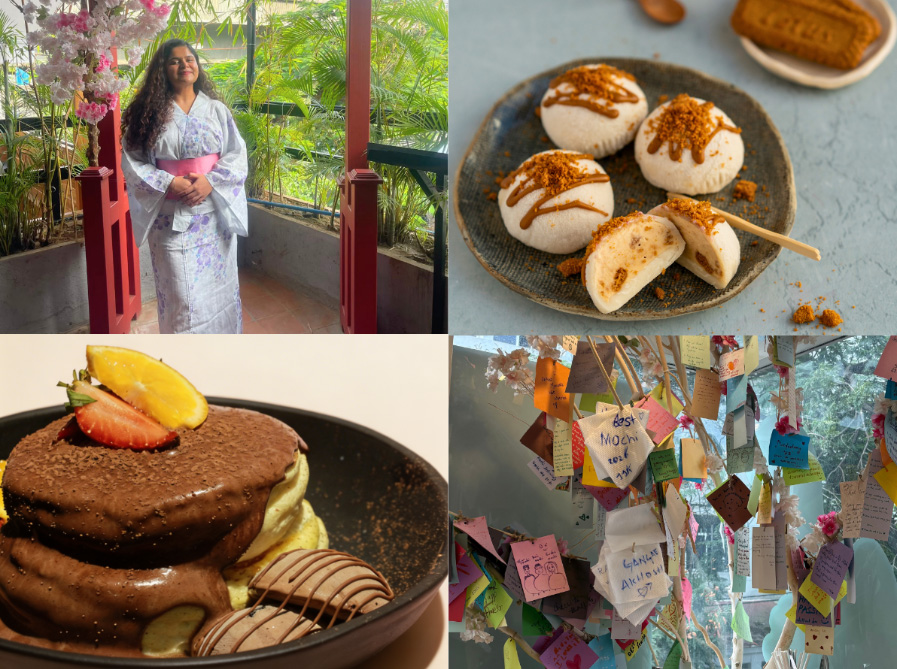
In a café scene filled with mainstream coffee houses and fast-casual eateries, Bengaluru’s Ame – The Kissaten is taking a more intentional route, bringing Japanese desserts, savouries and beverages to customers through a café experience built around craft, culture and storytelling.
Founded by Barkha Sahu, a former corporate lawyer turned entrepreneur, Ame began with a simple home kitchen experiment before becoming a cloud kitchen focused on handcrafted mochi ice creams. Today, that early experiment has evolved into a nine-seat Japanese Kissaten concept that has welcomed over 17,000 guests in around 18 months.
From a Home Kitchen to a Growing Café Brand
Barkha’s journey into food was not conventional. She never attended culinary school and instead taught herself through experimentation, turning her own kitchen into what she describes as an “experiment kitchen.” Recipes were repeatedly tested and refined until they met the standard she wanted to put forward.
The journey moved from a home kitchen to a cloud kitchen, where demand began to validate the concept, and eventually to a pilot café in Bengaluru. The early stages involved more than developing a menu. Barkha worked through sourcing, packaging, consistency, customer education and the operational challenges of building a category that was still relatively niche in India.
What began with Barkha personally serving customers and working late nights in the kitchen has now developed into a team-led operation with systems and SOPs in place. The transition has allowed Ame to move from being a founder-dependent business towards a repeatable café model.
Building a Japanese Café Experience Beyond Sushi and Ramen
Ame – The Kissaten has carved out a distinctive space around Japanese desserts, beverages and brunch culture. Its menu includes handcrafted mochis and mochi ice creams, Tokyo-style savoury soufflé pancakes, Japanese-inspired sweet soufflé pancakes, ceremonial-grade matcha beverages, Hōjicha and specialty Japanese beverages, along with freshly baked Shokupan open toasts.
Ame has also gained visibility through two features in The Indian Express for its handcrafted mochis and savoury soufflé pancakes, along with coverage from Curly Tales and food creators across Bengaluru. Collaborations with brands such as Manyata and Foodstories have further helped the brand introduce customers to matcha and mochi through experiential pop-ups.
From Pilot Café to a Larger Japanese Food Ecosystem
The next phase for Ame is about taking what has been proven at its pilot café and making it repeatable. The brand is preparing for its pre-seed expansion round, with plans to launch two larger-format cafés in Bengaluru focused on Japanese desserts, beverages and all-day brunch experiences.
Beyond cafés, the roadmap includes packaged confectionery, spreads and syrups, quick commerce, e-commerce and B2B partnerships, with a longer-term ambition of establishing an India-wide Japanese Kissaten chain.
For Barkha, the goal is not simply to build another café. It is to create a Japanese lifestyle food brand that can scale across formats while retaining the craft and precision that made Ame worth building in the first place.