
In Mumbai, where fashion often moves at the speed of trends, deadlines, and constant consumption, Ruchi’s Atelier is creating a far more personal experience around clothing and creativity. Led by interdisciplinary designer and artist Ruchi, the evolving practice brings people together through repair, storytelling, experimental workshops, and collective making sessions that feel intimate, raw, and deeply connected to everyday life.
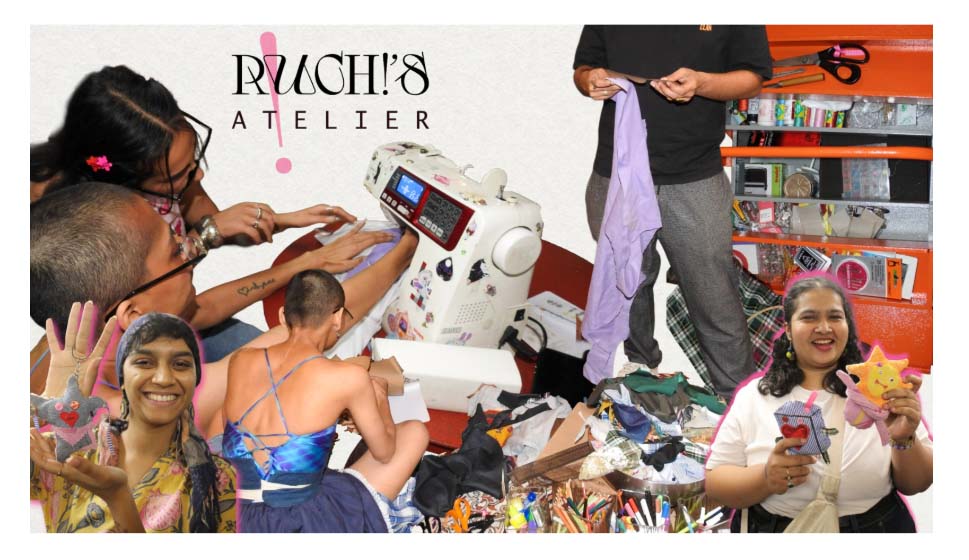
The atmosphere around these gatherings feels closer to a shared studio table than a formal fashion workshop. Old denim, unfinished garments, loose threads, fabric scraps, magazines, cardboard pieces, paints, handwritten notes, and sewing tools spread across the room while conversations move naturally between fashion, labour, sustainability, identity, and memory. Someone repairs a shirt they have been carrying around for years. Someone cuts apart an old dress to rebuild it into something wearable again. Another person sits quietly, sketching ideas while watching others work.
There is a sense of ease in the way people participate. No one arrives with the pressure to create something perfect. The value comes from spending time with materials, using hands again, exchanging ideas, and allowing creativity to exist without rushing it into a polished outcome. That shift changes the energy of the room completely.
Through projects connected to rue.che and Ruchi Dot Design, Ruchi continues exploring fashion, visual storytelling, political commentary, and community driven creative practice in a way that feels grounded rather than performative. Clothing becomes part of a larger conversation around emotional attachment, waste, repair culture, and the stories people carry inside the things they wear.
The growing interest around these “making parties” reflects a wider cultural shift. More young people are searching for creative spaces that feel collaborative instead of competitive. They want experiences that feel physical and real after spending most of their lives online. They want to learn through participation instead of a rigid structure. In these sessions, someone with years of sewing experience may sit next to someone threading a needle for the first time, and both become part of the same process.
That openness gives Ruchi’s Atelier its identity. The work feels lived in. Garments carry visible signs of repair. Fabric pieces move through multiple forms before finding their place. Materials usually overlooked become useful again. Even unfinished experiments remain valuable because they hold traces of thought, time, and conversation.
Mumbai’s independent creative scene has seen growing conversations around sustainable fashion, upcycling, slow design, and alternative art spaces, but Ruchi’s Atelier approaches these ideas in a way that feels personal rather than packaged. The practice stays rooted in people gathering together, making things with their hands, and rediscovering creativity as something shared.